 Every Munro
Munros in winter
In winter conditions a Munro is a mountaineering trip, not a hill walk: it needs an ice axe, crampons, winter boots and the skills to use them, and the days are short. Learn those skills on a course first, then pick a short hill with a high start on a settled day. No Munro is safe or easy under snow.
Who this is for
Winter skills first. If you have never used an ice axe and crampons, do not teach yourself on a Munro. Book a winter skills course or go with a qualified winter leader, or wait for summer. Everything below assumes you have the kit and have been taught to use it.
This page is for hillwalkers who have climbed Munros in summer and want to know what a first winter day involves. It is a summary of what Mountaineering Scotland and the mountain rescue teams publish, with this site's figures for five shorter hills. We have not climbed these hills for this guide, and nothing here replaces training.
What changes on a Munro in winter?
- The ground. Snow and ice turn a summer path into terrain where a slip becomes a slide. Mountaineering Scotland says winter needs equipment and skills beyond those needed for summer hill walking.
- The path. Snow blots out paths and much of the detail a walker steers by, and cloud or blowing snow can cut visibility to a few metres. Navigation has to be more exact.
- The edges. Cornices, overhanging lips of snow, build out over corries and cliffs and can break under a walker.
- Avalanches. They happen on Scottish hills. Mountaineering Scotland notes that slab avalanches run on slopes between 25 and 45 degrees, angles a walker meets on an ordinary route.
- The clock. There is far less daylight and everything takes longer. In mid December there are about 6 h 48 min of daylight at Glenshee.
- The cold. Wind chill on a summit can be far below the temperature in the glen, and a long wait for help is much more serious.
| When | Sunrise | Sunset | Daylight |
|---|---|---|---|
| Mid November | 07:54 | 16:03 | 8 h 09 min |
| Mid December | 08:45 | 15:32 | 6 h 48 min |
| Mid January | 08:40 | 16:04 | 7 h 24 min |
| Mid February | 07:42 | 17:13 | 9 h 30 min |
| Mid March | 06:30 | 18:15 | 11 h 45 min |
UK clock time for 2026, worked out by this site for the start of The Cairnwell at Glenshee. Every hill page shows today's sunrise and sunset at its own start.
What kit do you need for a winter Munro?
This is Mountaineering Scotland's winter list, on top of what you would carry in summer. Our Munro kit list explains each item and what to look for.
- An ice axe and crampons, and the skill to use both.
- Rigid-soled winter boots that take your crampons. Boots are rated B0 to B3 and crampons C1 to C3: a B1 boot takes a C1 crampon, a B2 boot a C2, and a flexible B0 boot should not be used with crampons at all.
- Goggles, which Mountaineering Scotland calls essential for navigation in some conditions.
- Spare gloves or mitts, at least two pairs, and a spare hat.
- A spare insulating layer, on top of waterproof jacket and overtrousers.
- A head torch and a spare, or spare batteries.
- A survival bag and a group shelter, a whistle and a small first aid kit.
- Map, compass and watch, and a phone with a spare battery pack.
- A hot drink in a flask, and spare high-energy food.
- A rucksack of about 45 litres to carry it all.
Microspikes are not a substitute. Mountaineering Scotland says they suit icy paths on low-angled ground and are unsuitable for steep or technical terrain.
What skills do you need?
Mountaineering Scotland's winter skills pages list the basics: kicking and cutting steps, walking in crampons, using the axe to steady yourself, and ice-axe arrest, which is stopping a slide whichever way up you are falling. These are physical skills. Reading about them is not enough: they have to be practised on a safe slope with someone who can correct you.
You also need to navigate on a compass bearing when snow has hidden the path, and to read an avalanche forecast and change your route to suit it. Mountaineering Scotland says a phone or GPS needs a separate backup, and that there are many call-outs because a phone or GPS has failed. Carry a map and compass and start with a full battery.
Where can you learn winter skills?
| Who | What |
|---|---|
| Mountaineering Scotland | A one-day introduction to winter skills and two-day winter skills courses, in the Cairngorms and Glencoe, for its members, with the cost held down by membership income. Also a student winter skills weekend, and winter navigation and avalanche awareness courses. |
| Glenmore Lodge | The national outdoor training centre, near Aviemore, which Mountaineering Scotland points to for winter courses. See its own pages for this season's courses and dates. |
| Association of Mountaineering Instructors | The body for qualified Mountaineering and Climbing Instructors. Look for the Winter Mountaineering and Climbing Instructor award for winter teaching. Its site has a search for instructors. |
| British Mountain Guides | The national body for internationally qualified mountain guides, with profiles of its members. |
| Winter Mountain Leader | Mountain Training's qualification for leading groups on the hills in winter. Ask anyone you pay to lead you which award they hold. |
Which forecasts should you read?
- Avalanche. The Scottish Avalanche Information Service publishes a daily forecast through the season for six areas: Lochaber, Glencoe, Creag Meagaidh, Northern Cairngorms, Southern Cairngorms and Torridon. Many Munros lie outside those areas: the forecast for the nearest one is a guide, not a promise. Its Be Avalanche Aware guidance explains how to use a forecast in planning and on the hill.
- Mountain weather. The Mountain Weather Information Service covers the Scottish hills in five areas and tells you the effect of the wind on you, the freezing level and the chance of cloud-free Munros. The Met Office mountain forecast is the second opinion.
- The summit itself. Each hill on this site has a summit weather page with wind, wind chill and the freezing level for 10 days. It is computer output for one point, so read it beside the written forecasts, not in place of them. It never rates a day better than Fair when the summit is at or below freezing or there is snow in the forecast.
Mountaineering Scotland's advice on winter planning is to expect slower travel, have a shorter alternative ready, and treat turning round as a good decision.
Which Munros are more forgiving for a first winter day?
None is safe, and none is easy. What a first winter day needs is margin: a short route, so there is daylight to spare and a quick way back; a modest climb; and ground with no scrambling. These five were picked from this site's route data on those three things alone. In summer conditions they take from 1.5 to 6 hours there and back, and every one takes longer on snow.
That choice says nothing about the snow, the ice or the avalanche risk on the day you go, which matter more than the hill. Go only with a settled forecast, and be ready to turn back at the first slope that is beyond you.
-
The Cairnwell
- There and back
- 3.8 km
- Climb
- 294 m
- Time to allow
- 1.5 to 2 h
Fair at best in winter. Under snow or ice this is not a walk: it needs an ice axe, crampons and the skills to use them.
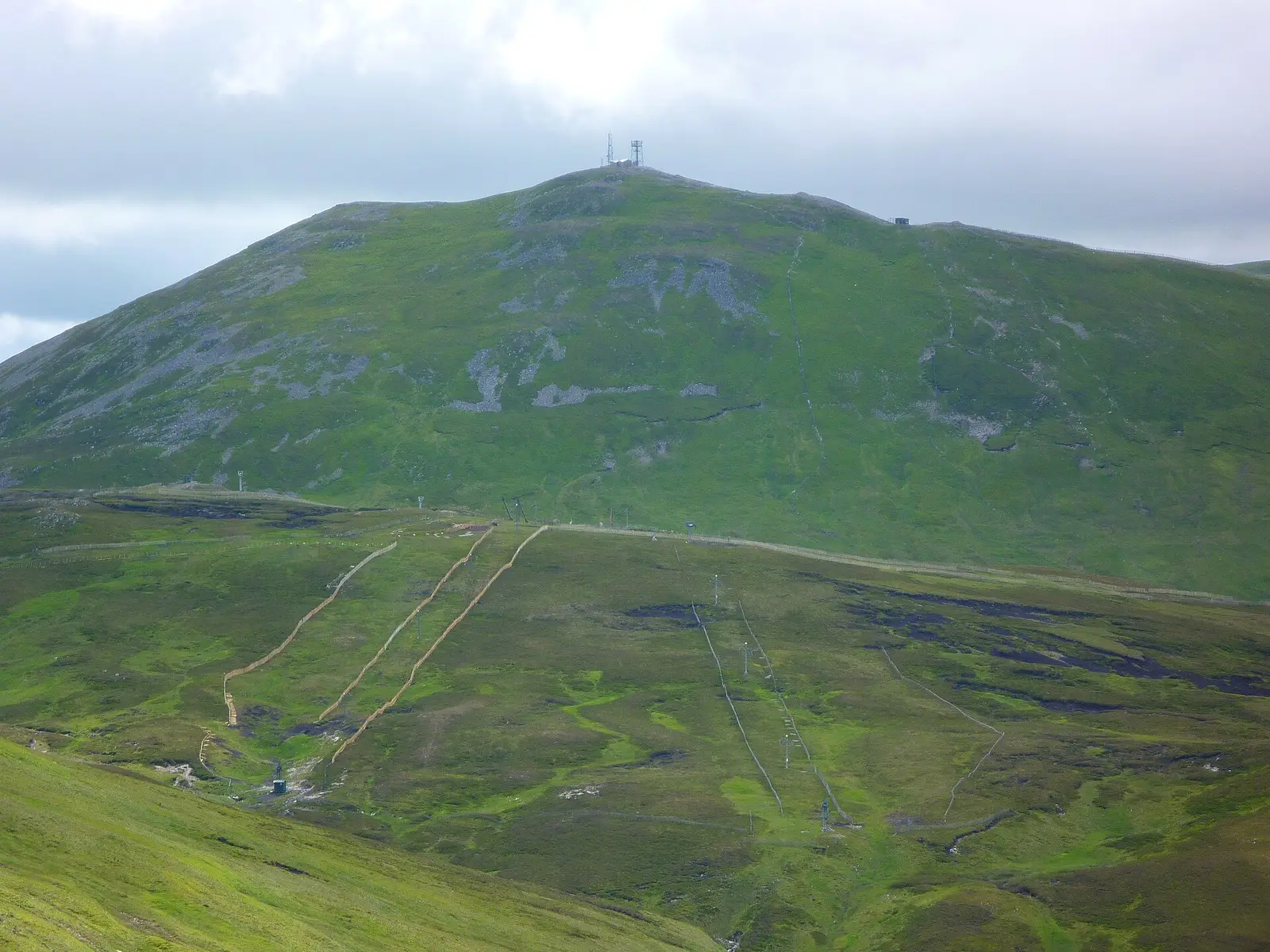
It is one of the shortest Munro walks on this site, from a car park beside the A93 at the Glenshee ski area.
A short walk means more daylight in hand, and a quick retreat if the weather turns. It is still a summit above 900 m in the eastern Highlands: the top is open to the wind, and in cloud or blowing snow there is little to steer by. Carn Aosda starts from the same car park.
-
Carn Aosda
- There and back
- 3.8 km
- Climb
- 277 m
- Time to allow
- 1.5 to 2 h
Fair at best in winter. Under snow or ice this is not a walk: it needs an ice axe, crampons and the skills to use them.
It shares The Cairnwell's high start, and the walk is about as short.
Carn Aosda stands inside the Glenshee ski area, with snow fences, tow pylons, huts and tracks reaching the summit. When the ski centre is open, keep clear of the pistes and tows.
-
Ben Chonzie
- There and back
- 12.6 km
- Climb
- 713 m
- Time to allow
- 4.5 to 5.5 h
Fair at best in winter. Under snow or ice this is not a walk: it needs an ice axe, crampons and the skills to use them.
It is a rounded hill of moorland, with a track for the first part of the way and no scramble flag on the route.
Ben Chonzie is the highest point of a wide spread of moorland and rounded hills north-west of Crieff, and it stands well apart from other Munros. Rounded hills give few landmarks. In mist or snow that makes a compass bearing matter more here than on a hill with a sharp top.
-
Ben Lomond
- There and back
- 12.5 km
- Climb
- 953 m
- Time to allow
- 5 to 6 h
Fair at best in winter. Under snow or ice this is not a walk: it needs an ice axe, crampons and the skills to use them.
It is the most southerly Munro, and the path from Rowardennan is a clear one in summer.
Snow hides that path. The start is almost at sea level, so the climb is a full one, and the last part of the route climbs steeply to the summit. It is a busy hill in every season, which does not make it a safe one.
-
Schiehallion
- There and back
- 10.4 km
- Climb
- 724 m
- Time to allow
- 4 to 5 h
Fair at best in winter. Under snow or ice this is not a walk: it needs an ice axe, crampons and the skills to use them.
A path climbs the east ridge from the Braes of Foss car park, and the hill stands on its own, so the line is simple on a clear day.
The upper half of the route climbs steeply for more than 3.2 km (two miles) along the ridge, which is open to the wind for its whole length. The hill is mostly quartzite, and rock under a thin cover of snow or ice is slow, awkward ground. Allow much more than the summer time.
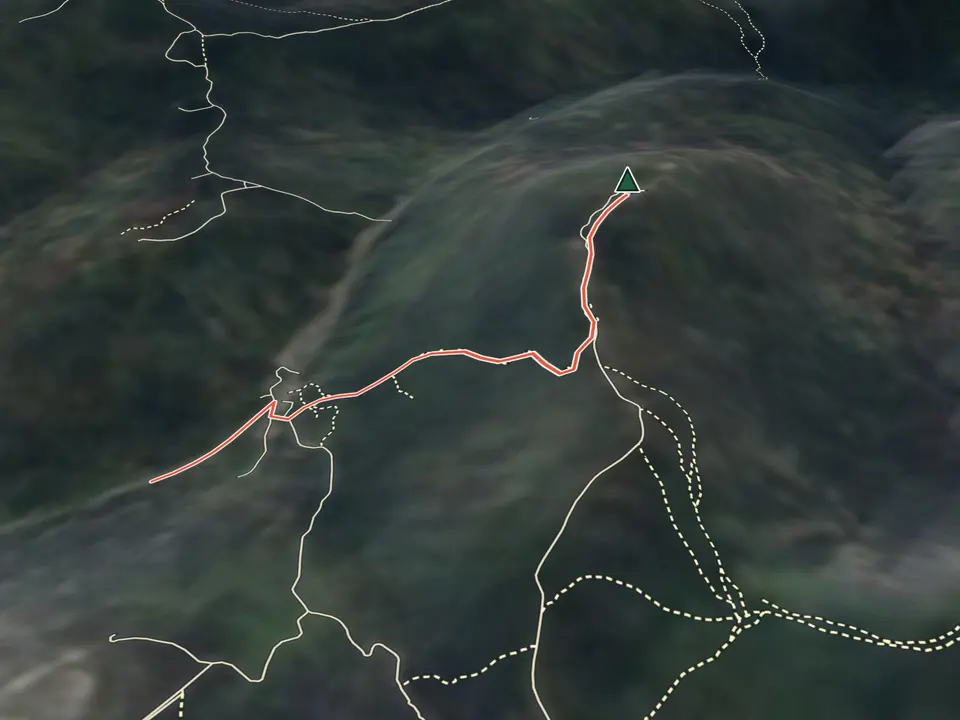
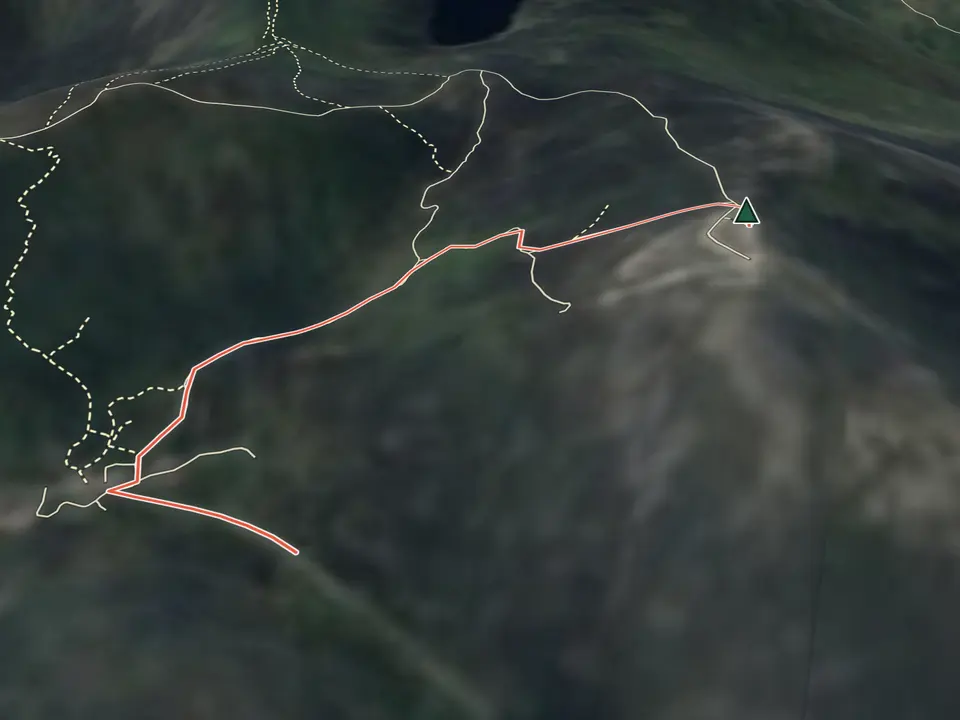
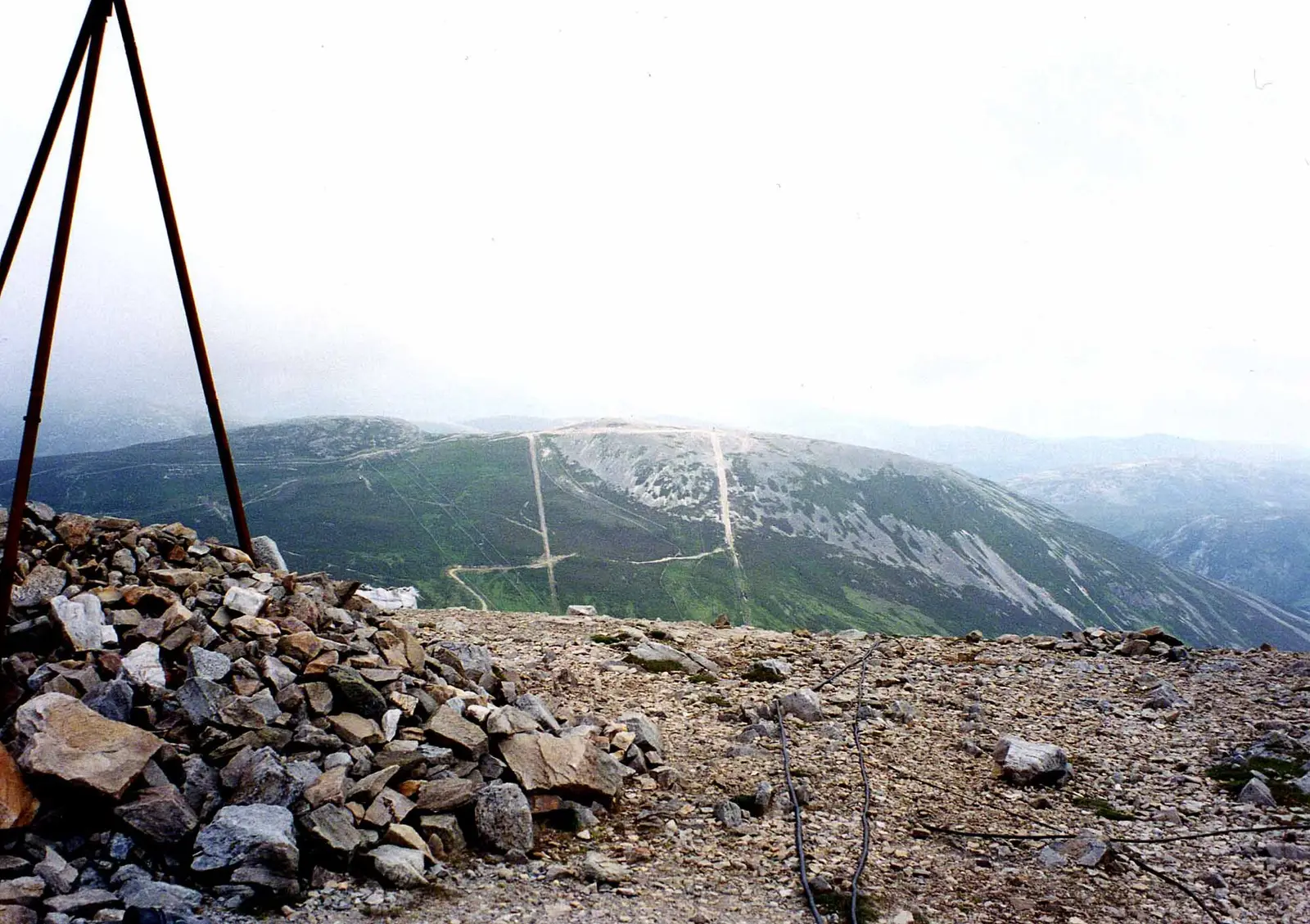
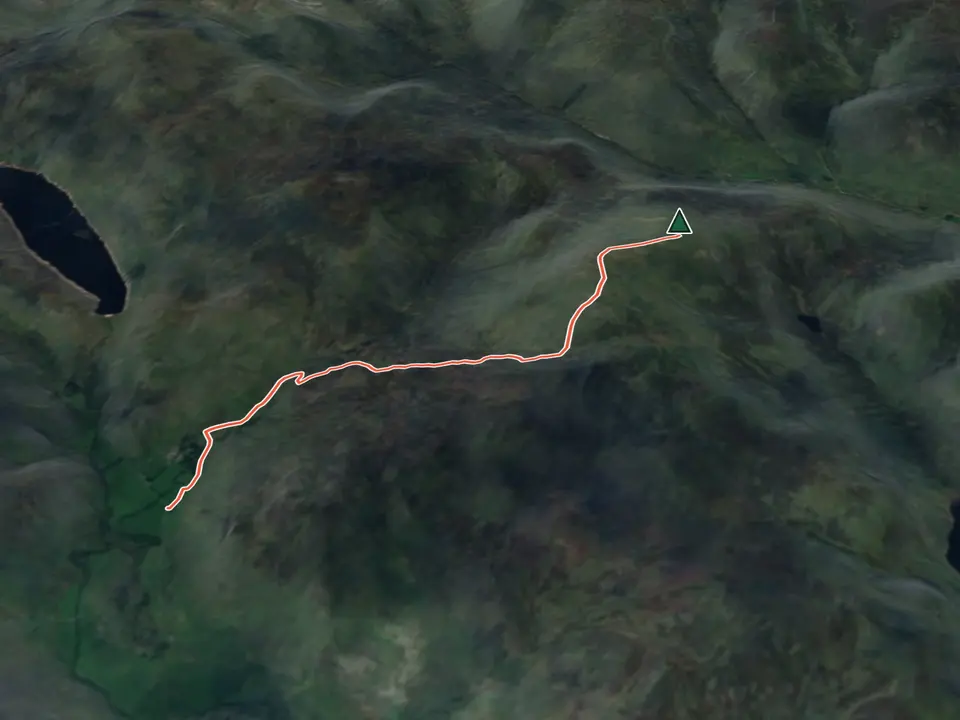
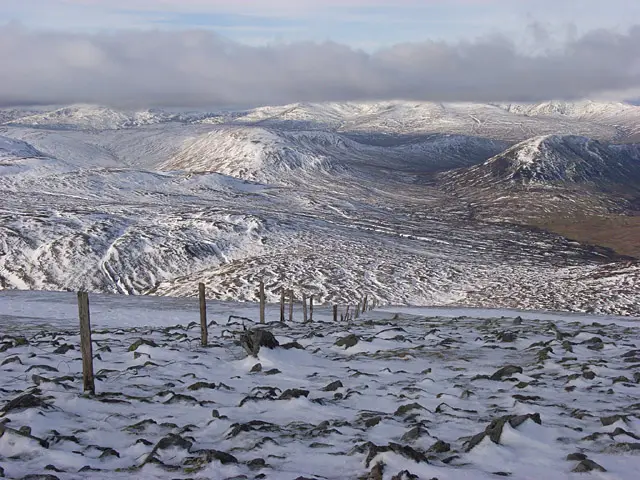
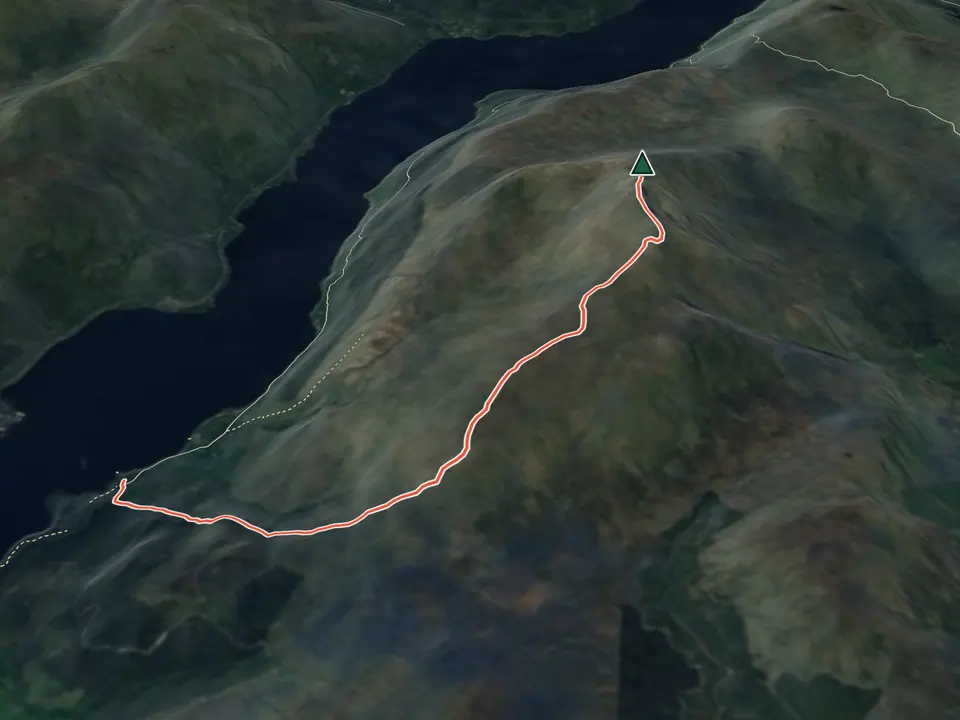
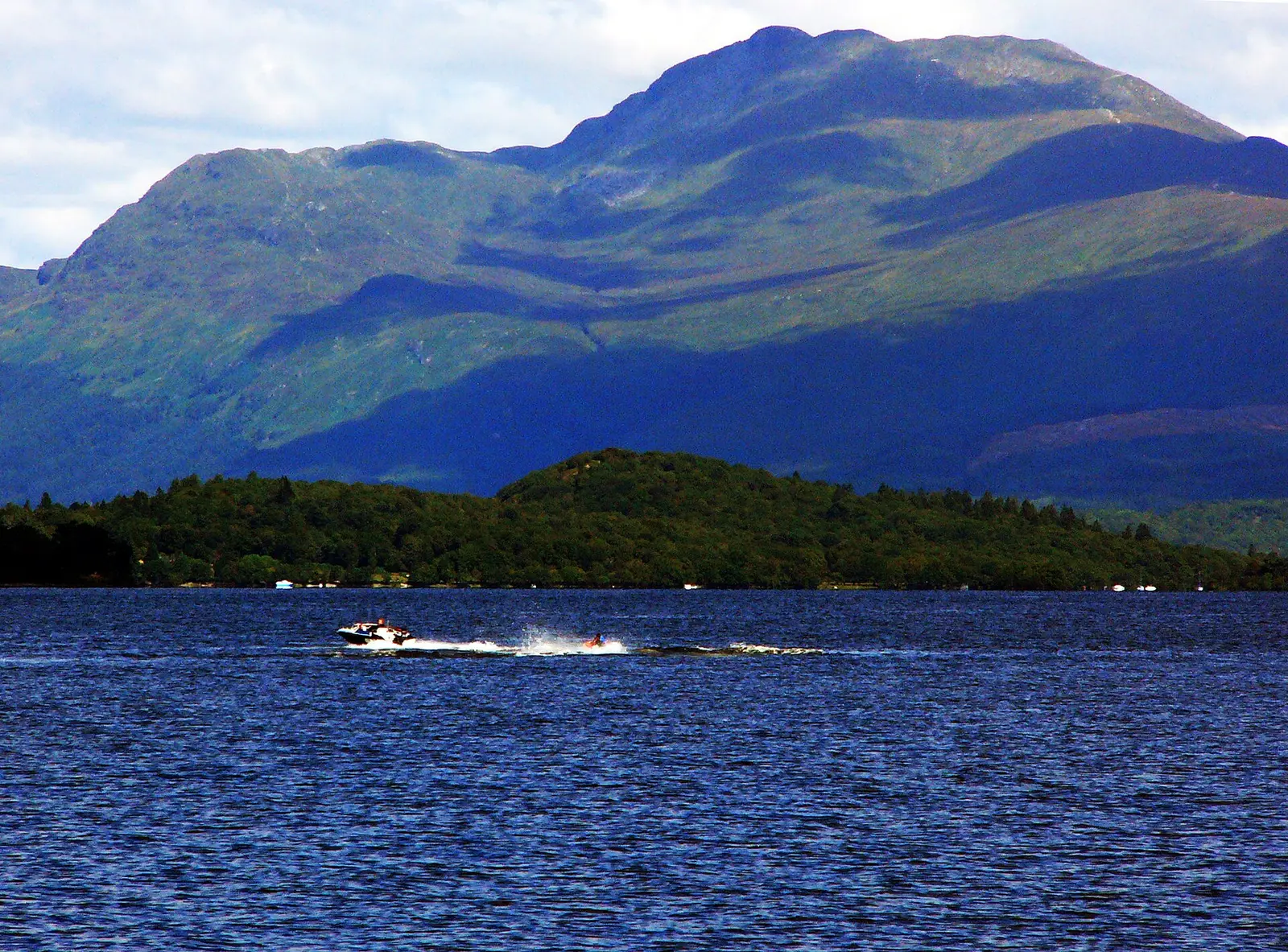
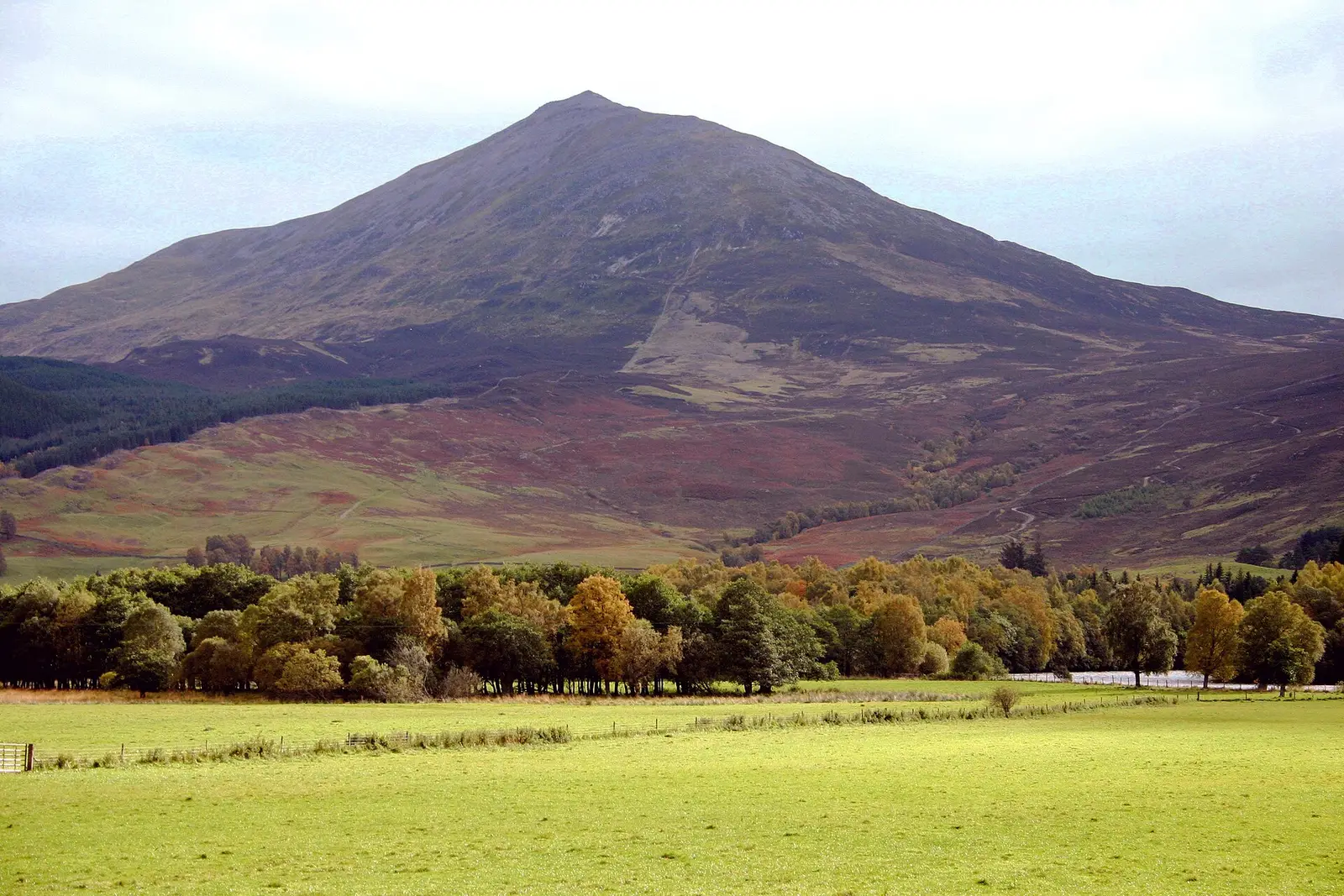


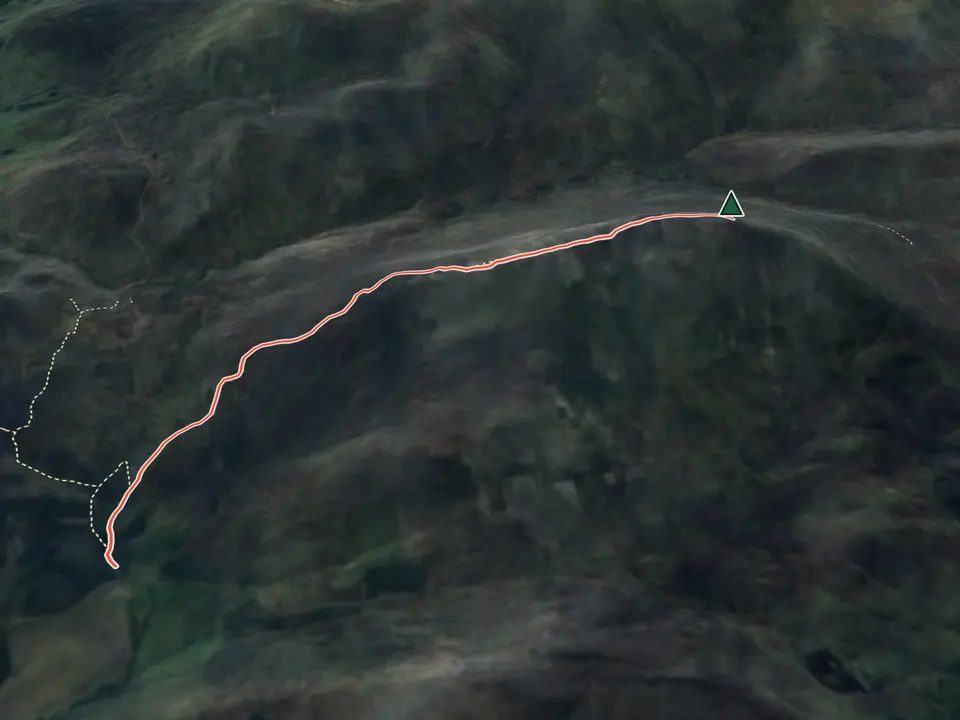
Times shown are this site's times for a dry summer day. Allow much longer in winter conditions. The 3D maps are shown without snow.
Which Munros should wait?
Anything that needs hands in summer is a climb in winter. The Aonach Eagach, the Cuillin, Liathach and An Teallach are for experienced winter mountaineers only: see the hardest Munros. So are long, remote days, where short daylight leaves no room for error.
Ben Nevis is a special case because so many people try it. VisitScotland says a winter ascent is only for experienced mountaineers: our guide to Ben Nevis in winter explains why. High plateaux such as Cairn Gorm and Ben Macdui are simple walking in summer and very serious in winter cloud and wind, when there is little to steer by.
If something goes wrong
Dial 999 or 112, ask for the police, then ask for mountain rescue. If the signal is too weak to call you can text 999, but only if you have registered first: text the word register to 999 before you leave home and follow the reply. Scottish Mountain Rescue also says to leave your route with a responsible person.
Help can take hours, and longer in the dark, so carry enough to stay warm while you wait. Scottish Mountain Rescue teams dealt with 798 incidents in 2025, across all seasons.
Questions
Can you climb Munros in winter?
Yes, but under snow and ice it is winter mountaineering, not hill walking. Mountaineering Scotland says it needs equipment and skills beyond those needed in summer: an ice axe, crampons, rigid-soled winter boots, and the ability to use them, to navigate when snow hides the path, and to judge avalanche risk.
What is the easiest Munro in winter?
No Munro is easy or safe in winter conditions. The more forgiving choices are short hills with a high start and no scrambling, such as The Cairnwell and Carn Aosda at Glenshee or Ben Chonzie, on a settled day with a good forecast. They still need winter kit and skills whenever there is snow or ice.
Do you need crampons and an ice axe for a Munro in winter?
Yes, whenever there is snow or ice on the hill, and you need to know how to use them. Mountaineering Scotland lists both in its winter kit, with rigid-soled winter boots, goggles and at least two spare pairs of gloves.
Are microspikes enough for a Munro?
Not on their own. Mountaineering Scotland says microspikes are for icy paths on low-angled ground and are unsuitable for steep or technical terrain. A Munro in winter conditions needs crampons and boots stiff enough to take them.
When is winter on the Munros?
It does not follow the calendar. The Scottish Avalanche Information Service usually publishes daily forecasts from mid-December to early April, and its first report of the 2025 to 2026 season came on 29 November 2025. Snow and ice can lie on the high tops outside those dates.
Where can I learn winter skills in Scotland?
Mountaineering Scotland runs one-day and two-day winter skills courses for its members in the Cairngorms and Glencoe, and Glenmore Lodge near Aviemore is the national outdoor training centre. You can also hire a qualified instructor through the Association of Mountaineering Instructors or British Mountain Guides.
How much daylight is there for a winter Munro?
About 6 h 48 min in mid December at Glenshee, from sunrise at 08:45 to sunset at 15:32. Travel is slower on snow, so pick a short route, start at first light and carry a head torch each with a spare.
Next
- Munros for beginners Eight good first Munros, with the distance, climb and time for each.
- What is a Munro? How many there are, how high they have to be, and who Sir Hugh Munro was.
- How long does it take to climb Ben Nevis? The time to allow, the two routes, where to park and Ben Nevis in winter.
- Ben Lomond How long it takes, the tourist path against the Ptarmigan ridge, and the Rowardennan car park.
- Schiehallion The Braes of Foss car park, where the path ends and how long the walk takes.
- Ben Lawers The car park on the hill road, the walk over Beinn Ghlas and the nature reserve.
- Ben Chonzie The two places to park, Glen Lednock and Loch Turret, and the walk from each.
- Ben Vorlich (Loch Earn) Where to park at Ardvorlich, the walk from the loch, and Stuc a' Chroin next door.
- Beinn Eighe The two Munros, the round by Coire Mhic Fhearchair, and the nature reserve trails.
- An Teallach The two Munros from Dundonnell, and the pinnacle ridge that is a serious scramble.
- Liathach The two Munros above Glen Torridon, each on its own, and the pinnacles between.
- Beinn Alligin The two Munros, the great cleft of the Eag Dhubh, and the Horns of Alligin.
- Buachaille Etive Mor The walkers' way up by Coire na Tulaich, the full ridge, and the risk under snow.
- Buachaille Etive Beag Two Munros from one start on the A82, by a path to the col between them.
- The Five Sisters of Kintail The ridge above Glen Shiel, its three Munros, and the long one-way traverse.
- The Ring of Steall Four Mamores Munros above Glen Nevis, two narrow ridges and a wire bridge.
- The CMD Arete The scramble from Carn Mor Dearg to Ben Nevis: how hard, how long and the way off.
- Bla Bheinn Skye's walkers' Munro from Loch Slapin, the easy scrambling at the top, and Clach Glas.
- Beinn a' Ghlo Three Munros above Blair Atholl from one car park, and the long round of all three.
- Slioch The Munro above Loch Maree, by the long walk in from Incheril and Coire na Sleaghaich.
- The Tarmachan Ridge Meall nan Tarmachan from the Ben Lawers road, and the ridge beyond with its one short scramble.
- Lochnagar and the White Mounth Lochnagar from Glen Muick, the four other Munros of the plateau, and the five-Munro circuit.
- The Ben Lawers range Seven Munros north of Loch Tay, each on its own walk, and the long one-way traverse.
- The Cuillin ridge What the Skye ridge is, its eleven Munros, the grade of the ground, and why many go with a guide.
- Best hikes in Scotland Ten standout Munro walks, from Ben Lomond to Ben Hope.
- Munro bagging: how to start What it is, how people keep count, and how long a round takes.
- What to take up a Munro A kit list for summer and winter, and what to look for in each item.
- Munros by train and bus The stations and coach stops that put you at the foot of a Munro.
- A weekend of Munros Two-day plans from Glasgow, Edinburgh, Inverness and Aberdeen.
- The nearest Munro to England Ben Lomond, and how far it is from Carlisle, Newcastle and the cities further south.
- The Arrochar Alps The four Munros at the head of Loch Long, with the two places to start.
- Glencoe Munros Five walks in Scotland's most famous glen, and the ridges to leave for later.
- Cairngorms Munros Six walks into Britain's highest range, from the Aviemore and Braemar sides.
- Skye Munros The twelve on the island, from the walkable to the Inaccessible Pinnacle.
- The Inaccessible Pinnacle The story of the In Pinn, the only Munro that needs a rock climb.
- Torridon Munros Liathach, Beinn Eighe and Beinn Alligin, by the walkers' routes.
- Glen Lyon Munros The six Munros of Glen Lyon, from Invervar and Loch an Daimh, with the walk to each.
- Cairnwell Munros The three short walks from the top of the Cairnwell Pass at Glenshee.
- Glen Affric Munros All 16 of Glen Affric, Loch Mullardoch and Glen Strathfarrar, from Carn Eighe down.
- Corrour Munros Five Munros from a station with no road, and how to fit them round the trains.
- Mamores Munros All ten between Glen Nevis and Kinlochleven, with five walks and the full traverse.
- Kintail Munros All 23 of Kintail and Glen Shiel, from the Five Sisters to the Cluanie hills.
- Fannichs Munros The nine north of Loch Fannich, from Sgurr Mor down, with five walks.
- Fisherfield Munros The five remote Munros of the Great Wilderness, with An Teallach and Slioch.
- The hardest Munros The climb, the scrambles and the long remote days, ranked from site data.
- The Aonach Eagach The Glencoe ridge, its two Munros, and why it is a scramble and not a walk.
Munros near: Glasgow, Edinburgh, Stirling, Perth, Dundee, Aberdeen, Aviemore, Inverness, Fort William, Pitlochry, Oban, Ullapool, Braemar, Killin, Crianlarich, Tyndrum, Kinlochleven